


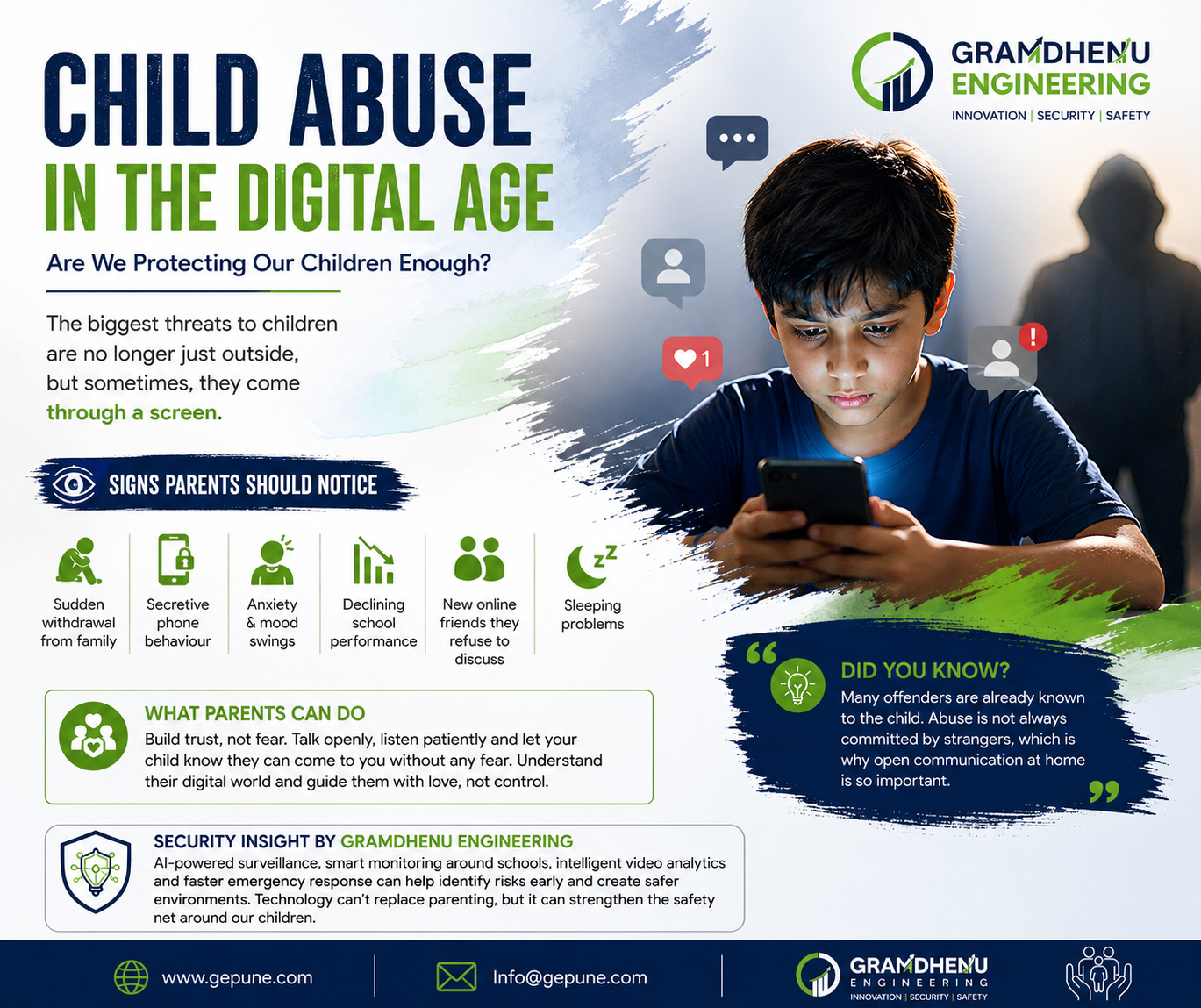
Child Abuse in the Digital Age: Are We Protecting Our Children Enough?
When Home Feels Safe, But the Internet Doesn't
Every evening, thousands of children in cities like Mumbai, Pune, Bengaluru, and Delhi return home before their parents. In many nuclear families, both mother and father are working, so children spend a few hours alone. They finish their homework, heat their dinner, and pick up a mobile phone to watch videos, chat with friends, or play online games.
Now imagine a twelve-year-old boy who meets a new friend while playing an online game. They chat every day, exchange jokes, and discuss school life. Slowly, that "friend" starts asking personal questions, encourages him to keep their conversations secret, and gains his complete trust.
The child believes he has found a genuine friend.
In reality, he could be talking to someone with harmful intentions.
This is no longer a rare incident. It reflects a growing challenge that many families are facing today.
Child Abuse Has Changed with the Digital World
A few years ago, parents mostly worried about strangers outside the home. Today, the bigger threat often comes through a smartphone or laptop.
Online grooming, cyber blackmail, fake friendships, social media manipulation, and exploitation through gaming platforms have become common methods used by offenders. In many cases, they don't threaten children immediately. They first become someone the child trusts.
What makes this even more worrying is that abuse doesn't always come from strangers. Sometimes it involves someone the child already knows, such as a neighbour, family acquaintance, tutor, or another trusted adult.
As technology becomes a larger part of children's lives, protecting them requires more than simply limiting screen time.
Why Children Stay Silent
Parents often wonder why a child doesn't speak up.
The answer is simple. Most children are scared.
They worry they will be blamed for talking to strangers. Some fear their parents will take away their phone. Others feel embarrassed or are manipulated into believing that no one will understand them.
By the time parents notice something is wrong, the child may already be dealing with fear, anxiety, or emotional pressure.
This is why trust is one of the strongest forms of protection a family can build.
Small Changes That Deserve Attention
Every change in behaviour doesn't indicate abuse, but a combination of these signs should never be ignored.
Watch for:
-
Sudden withdrawal from family conversations.
-
Secretive phone or internet use.
-
Anxiety or unusual fear.
-
Falling interest in studies or hobbies.
-
Mood swings and disturbed sleep.
-
New online friends they never talk about openly.
Instead of reacting with anger, start with a calm conversation. Children open up when they feel safe, not when they feel judged.
Building Trust Is More Important Than Monitoring
Technology can help parents monitor devices, but no app can replace open communication.
Ask your children about the games they play, the people they interact with, and the platforms they use. Spend time understanding their digital world instead of treating it as something separate from family life.
More importantly, let them know that if something ever makes them uncomfortable, they can come to you without fear of punishment.
A child who trusts their parents is far less likely to face a problem alone.
Did You Know?
Many child abuse cases involve someone the child already knows. This is why teaching children about personal boundaries, safe relationships, and speaking up is just as important as warning them about strangers.
Security Insight by Gramdhenu Engineering
As our cities become smarter, technology can play an important role in protecting children. AI-powered surveillance around schools, intelligent monitoring of public spaces, faster emergency response systems, and smart video analytics can help identify suspicious behaviour before an incident occurs. While technology can never replace parents or teachers, it can become another layer of protection in creating safer communities.
A Responsibility We All Share
Child safety is no longer only about protecting children from dangers outside the home. It is also about preparing them for the digital world they enter every day.
Parents, teachers, schools, technology companies, and society all have a role to play. By building trust at home, encouraging open conversations, and using technology responsibly, we can create an environment where children feel safe to speak up before a small concern becomes a life-changing incident.
Because the best security system any child can have is not just a camera or an app. It is a family that listens, a community that cares, and a society that refuses to look away.


Recent Posts